Mom Baby – Wheelchair, Line Art
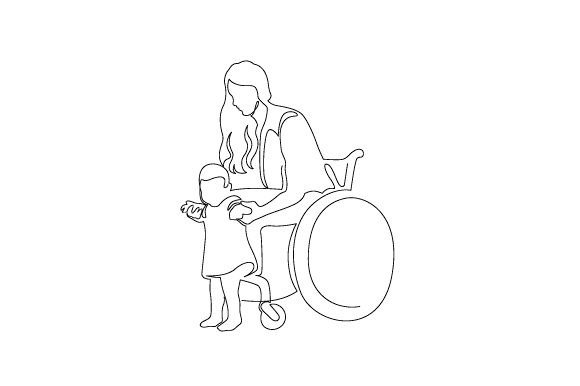
As someone who’s stitched hundreds of designs for clients, small shops, and personal keepsakes—especially around Mother’s Day—I opened Mom Baby – Wheelchair, Line Art expecting quiet strength. What I found was exactly that: a tender, uncluttered line drawing that speaks volumes without saying a word. It’s not flashy. It doesn’t shout. But it holds space—gently, intentionally—for representation that matters.
A Design That Breathes on Fabric
The first thing that stands out is its line art simplicity. Clean contours. No shading, no gradients, no fill-heavy zones—just confident, continuous strokes tracing a mother and baby, both seated in a wheelchair. The composition balances warmth and dignity: the baby rests against the mother’s chest, arms wrapped just so; the wheels are subtly detailed but never fussy. There’s no decorative border or extra motif—just the two figures, centered and grounded. That restraint makes it incredibly adaptable: whether you’re embroidering a soft cotton tea towel for a new mom’s kitchen or stitching it onto a structured canvas tote for a boutique launch, the design lands with clarity—not clutter.
Real-World Use: A Custom Tote Bag for a Local Mom’s Group
Last week, I prepped this exact design for a limited-run embroidered tote bag—intended as a gift for members of a local adaptive parenting collective. We used medium-weight natural canvas, a tear-away stabilizer, and 40-weight rayon thread in soft sage and charcoal. On the hoop, the lines translated beautifully: crisp at the curves of the wheelchair frame, delicate where the baby’s fingers curled near the mother’s collarbone. No skipped stitches. No thread breaks. Because it’s pure line art—no dense satin or fill areas—the stitch density stayed low and breathable. That meant the fabric didn’t pucker, even across the tote’s gusset seam. Customers noticed the subtlety immediately: “It feels like it was drawn just for us,” one told me. That’s the power of intentional minimalism.
Where It Shines (and Where to Pause)
Mom Baby – Wheelchair, Line Art works exceptionally well for:
- Custom apparel: Sweatshirts, crewnecks, and lightweight hoodies—especially when placed on the left chest or upper back. The clean lines hold up even on textured fleece.
- Baby embroidery: Swaddles, onesies, and burp cloths—provided you use a lightweight cut-away stabilizer and reduce top tension slightly to prevent puckering on thin knit fabrics.
- Embroidered patches: Its outline-based structure makes it ideal for sew-on or iron-on patches—no need for complex appliqué layers or underlay adjustments.
- Holiday embroidery & personalized gifts: As a Mother’s Day craft, it avoids cliché while honoring real family structures. It reads clearly on mockups for Etsy listings and looks equally thoughtful on a linen pillow cover or ceramic mug transfer.
Use caution with:
- Very small hoop sizes (under 3”): Some details—like the subtle curve of the baby’s ear or the spoke spacing on the wheel—may lose definition. Always test at your intended size first.
- Stretchy or slippery fabrics (e.g., jersey, satin): Stabilization is non-negotiable here. A light fusible + tear-away combo prevents distortion during stitching.
- Dark fabric backgrounds: Since it’s line art, contrast depends entirely on thread choice. Test black thread on navy—it can disappear. Opt for off-white, heather gray, or metallic silver for visibility without harshness.
- Curved surfaces (caps, curved apron pockets): The design’s horizontal balance means it may require slight digitizing tweaks—or better yet, placement on flatter zones like the front panel of a dad cap or center of a crossbody bag.
What This Design Says About Your Brand
When you choose Mom Baby – Wheelchair, Line Art, you’re not just selecting a machine embroidery design—you’re signaling values. For Etsy sellers and handmade shops, it elevates perceived craftsmanship: customers recognize thoughtful curation over stock clipart. For craft business owners, it supports brand consistency—especially if your shop focuses on inclusive, modern parenting or adaptive living. And for commercial embroidery studios? It’s a low-risk, high-resonance asset: fast to stitch, easy to scale, and emotionally intelligent without being saccharine.
It also builds customer trust. Parents seeking representation rarely want caricature or tokenism. They want authenticity—and this design delivers it through omission as much as inclusion. No exaggerated features. No forced symbolism. Just presence. That honesty translates directly into buyer engagement: longer site dwell time, higher cart conversion on personalized gift listings, and more repeat orders from communities who feel seen.
Practical Designer Notes Before You Stitch
Before committing to production—whether for a single custom order or a batch of 50 sweatshirts—do these six things:
- Test on scrap fabric using your exact stabilizer, thread, and machine settings—not just on paper or screen.
- Check thread color contrast in both daylight and indoor lighting. A shade that pops on screen may fade on oatmeal linen.
- Review stitch density in your embroidery software—if you see overlapping running stitches or tight corners, consider simplifying minor overlaps manually.
- Confirm hoop size compatibility with your intended product. If stitching on a child’s cap, verify the design fits comfortably within your cap frame’s usable area.
- Inspect small details at 200% zoom: are all lines connected? Is the wheel’s axle fully closed? These matter most when scaling down.
- Verify licensing before selling finished items or digital embroidery files. Since Mom Baby – Wheelchair, Line Art includes SVG, PNG, EPS, and DXF formats, confirm whether commercial use is permitted—especially for resale on platforms like Etsy or Shopify.
This isn’t just another Mother’s Day craft. It’s a quiet act of inclusion, stitched with intention. Whether you’re designing for a client, building a small shop product line, or making something deeply personal, Mom Baby – Wheelchair, Line Art earns its place—not because it’s trendy, but because it’s true.