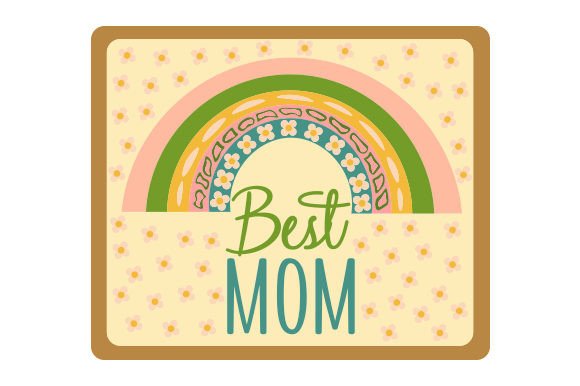
Junk Journal Sticker - Best Mom
A Designer’s First Glance: Warm, Hand-Drawn, and Unapologetically Sincere
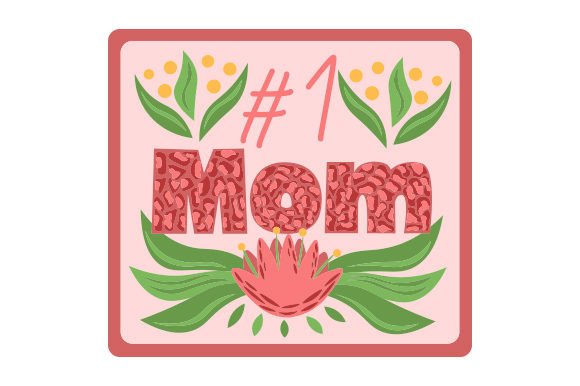
When Junk Journal Sticker - Best Mom opens on screen, it lands with the quiet confidence of a well-loved sketchbook page—slightly imperfect lines, soft curves, and that unmistakable handmade charm. It’s not sleek or minimalist; it’s affectionate, approachable, and emotionally immediate. The phrase “Best Mom” sits center-frame in a gentle script, framed by subtle botanical flourishes—think tiny leaves, a looping vine, maybe a single daisy or heart tucked into the negative space. There’s no aggressive boldness here, no sharp angles demanding attention. Instead, it invites closeness. That matters—especially when you’re translating this into thread.
Real-World Use Case: A Custom Embroidered Tote for a Local Mom & Baby Boutique
Last week, I prepped Junk Journal Sticker - Best Mom for a small-batch run of canvas tote bags—intended as free gifts with purchase during a Mother’s Day pop-up. The tote was natural unbleached cotton, medium-weight, with visible weave texture. I chose a matte 40-weight rayon thread in warm taupe for the lettering and sage green for the vines. Right away, the design’s moderate scale (roughly 3.5" wide) held up beautifully in the hoop. No crowding. No distortion. The curves stitched cleanly, and the letterforms retained their hand-lettered softness—not stiff, not pixelated, not overly dense. Customers responded instantly: “That looks like something my kid drew,” one said, smiling. Another snapped a photo before leaving. That emotional resonance? That’s the design doing its job—not just decorating fabric, but anchoring sentiment.
Where It Shines (and Where It Asks for Thoughtful Handling)
Junk Journal Sticker - Best Mom is strongest on stable, mid-to-heavyweight fabrics: denim aprons, linen pillow covers, cotton tea towels, structured caps, and baby onesies made from Pima or combed cotton. Its open layout and modest detail level translate reliably to satin stitch outlines and light fill areas—no excessive underlay, no risky tiny interior stitches that vanish on textured surfaces.
- Custom apparel: Works cleanly on sweatshirts (front chest placement), lightweight crewnecks, and even woven baby blankets—if stabilized with medium tear-away and hooped firmly.
- Embroidered patches: Excellent candidate for iron-on or sew-on backing. The clean outer shape and consistent stroke weight hold up well through cutting and finishing.
- Holiday embroidery & personalized gifts: Fits naturally into Mother’s Day gift sets—think embroidered kitchen towels paired with a handwritten note, or a mini hoop art piece using the design as a focal point.
- Craft business & Etsy listings: As a digital embroidery file, it supports quick mockup generation. I dropped it into a printable mockup of a cream-colored canvas pouch—no tweaking needed. Looks cohesive, professional, and warm.
Where to Pause—and Test First
This isn’t a “drop-in-and-stitch” design for every surface. Its charm lives in its subtlety—and that subtlety can blur if rushed. On stretchy knits (like jersey tees), use cutaway stabilizer *beneath* and topping *on top* to prevent puckering and keep those delicate loops legible. On dark fabric, test thread contrast early: light sage or oatmeal thread may disappear against charcoal or navy unless you add a white underlay—or switch to ivory or pale gold. And avoid placing it on highly curved areas (like the crown of a dad cap) without resizing down to ~2.75"; the bottom curve of the “M” in “Mom” can distort slightly if stretched across tight radius.
Also worth noting: the floral accents are decorative, not structural. They’re best treated as accents—not primary motifs. If you’re building a full monogram or layered appliqué piece, Junk Journal Sticker - Best Mom serves better as a standalone sentiment than as a base layer beneath heavier elements.
What It Adds to Your Finished Product—Beyond the Stitch
Used thoughtfully, this design elevates perceived value without raising production complexity. It reads as handmade—not mass-produced. That builds trust with buyers who seek authenticity, especially in the Mother’s Day and crafts space. For Etsy sellers, it pairs well with neutral palettes and natural materials, reinforcing brand consistency across listings. For boutique owners, it lends warmth to merchandise without shouting—ideal for high-touch, low-volume gifting. And for clients commissioning custom embroidered baby items? It delivers sincerity, not cliché. No glitter, no cartoon hearts—just grounded, tender recognition.
Practical Notes Every Embroidery Designer Should Run Through
- Test Junk Journal Sticker - Best Mom on scrap fabric matching your final project’s weight and stretch.
- Check stitch density visually—look for balanced satin stitch coverage, no skipped sections or overfilled corners.
- Confirm hoop size compatibility: most versions will fit comfortably in a 4"x4" hoop, but verify before batching.
- Inspect small details at 200% zoom: does the inner loop of the “o” in “Mom” hold clarity? Are vine ends tapered cleanly?
- Mock it up in black and white first—this reveals contrast issues faster than color previews.
- Use appropriate stabilizer: medium tear-away for stable wovens, cutaway + topping for knits or napped fabrics.
- Review licensing terms before selling finished embroidered items or bundling the digital file—it’s listed under Crafts, so confirm commercial use permissions directly with the seller if reselling digitally.
Final Thought: A Quiet Design With Real Weight
Junk Journal Sticker - Best Mom won’t dominate a garment—but it doesn’t need to. Its strength is in resonance, not volume. It fits seamlessly into real embroidery projects where feeling matters more than flash: a toddler’s first embroidered bib, a nurse’s embroidered scrub pocket, a handmade card holder for a new mom, a small shop’s signature gift tag. It’s the kind of machine embroidery design that reminds us why we stitch in the first place—not just to make things, but to mark moments with care. Keep it simple. Honor the line work. Trust the sentiment. And always, always test on fabric first.