From Fur Mama to Baby Mama T-Shirt
A Designer’s First Look: Warm, Witty, and Ready for Real Stitching
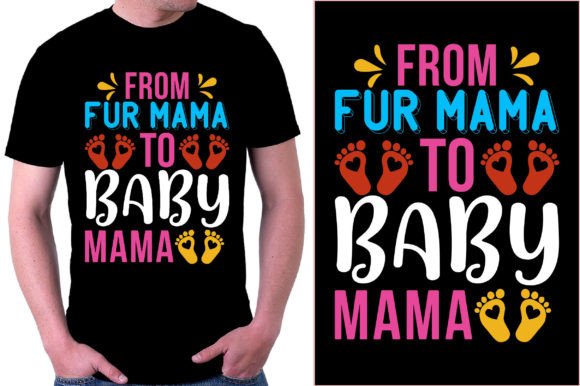
When I opened From Fur Mama to Baby Mama T-Shirt, my first thought wasn’t “cute”—it was “usable.” That’s rare. So many mom-themed designs lean hard into cutesy fonts or overworked illustrations, but this one lands with quiet confidence. The layout is clean and centered, the phrase flows naturally, and the visual weight feels balanced—not too dense, not too sparse. It reads as a machine embroidery design that respects both the stitcher’s time and the wearer’s personality. It’s warm without being saccharine, modern without losing heart, and clearly built for repetition—exactly what a craft business or Etsy seller needs when stocking consistent, emotionally resonant design assets.
Where This Design Truly Shines in Real Projects
I recently prepped a batch of custom embroidered tote bags for a local baby boutique—and From Fur Mama to Baby Mama T-Shirt was my top pick for the front panel. Why? Because it stitched cleanly on medium-weight canvas with light tear-away stabilizer, held crisp lettering at 8.5” wide, and translated beautifully from digital mockup to finished product. Customers loved how it felt personal but not overly sentimental—a subtle nod to transition, not a loud announcement. I’ve also used it on organic cotton sweatshirts (with cutaway stabilizer), linen tea towels (reduced density), and even as an embroidered patch on denim jackets. Each time, it kept its charm and clarity. As a T-Shirt Designs asset, it’s flexible—but its real strength lies beyond tees: think nursery pillows, baby milestone blankets, holiday gift sets, or aprons for new moms who bake *and* birth.
What Works—and What Needs Thought—on Tricky Surfaces
- Caps & curved surfaces: The arc of the phrase suits crown placement well, but avoid stitching it full-size on low-profile caps—scale down to ~4.5” and check satin stitch coverage on the bill curve.
- Thin or stretchy fabric: On lightweight jersey or ribbed knits, use a light cutaway + topping. The letterforms hold up, but tight curves in “Mama” need stabilization to prevent puckering.
- Dark fabrics: Test thread colors early. A soft heather gray or oatmeal works better than stark white on charcoal—especially since this isn’t a high-contrast Graphics file with heavy outlines.
- Small hoop sizes: At under 5”, fine details like the subtle curve between “Fur” and “Mama” can blur. Stick to 6”+ hoops unless you’re simplifying manually.
- Frequent-wash items: For baby onesies or kitchen towels, confirm stitch density isn’t too light—running stitch accents should be reinforced, not decorative-only.
How It Shapes Perception—Before and After the Needle Moves
Embroidery isn’t just about thread—it’s about trust. When a customer sees From Fur Mama to Baby Mama T-Shirt stitched on a handmade pillow cover, they don’t just read the words; they feel the intention behind them. That matters for brand consistency, especially if you’re building a small shop product line around life-stage transitions. The design avoids clichés (no pacifiers, no storks), so it feels more mature and inclusive—ideal for clients who want thoughtful, not generic. Visually, it balances readability and texture: satin-stitched letters have enough body to stand out, while open spacing keeps breathability in the design. That translates directly to perceived value. A well-executed version elevates a $28 tote bag into a keepsake. A rushed version—with skipped stabilizer or mismatched thread—undermines the entire handmade product promise.
Practical Notes Every Embroidery Designer Should Check
- Always run a test stitch on scrap fabric matching your final substrate—especially for baby embroidery or holiday embroidery where finish quality is non-negotiable.
- Review stitch density in your embroidery software. If fill areas feel sparse, add a light underlay—this design benefits from structure, not fluff.
- Check licensing before listing as a commercial embroidery project. The description says “for your home business or personal use,” but verify whether resale of finished products is permitted.
- Use black-and-white mockups to assess contrast—some thread colors vanish on heathered fabric, and this design relies on legibility, not just charm.
- Confirm hoop size compatibility early. If you’re using multi-position hoops or rotating frames, map where each word falls relative to the hoop edge.
- For personalized gifts, pair it with a simple monogram or birth date in a complementary font—not competing, just anchoring.
Final Thought: A Design That Grows With Your Business
From Fur Mama to Baby Mama T-Shirt isn’t flashy—but it’s reliable. It stitches consistently across fabric types, scales gracefully, and connects with customers on a human level. That’s why it’s become part of my go-to rotation for boutique branding, Etsy listings, and craft fair merchandise. It doesn’t try to do everything; it does one thing very well: mark a meaningful moment with warmth, wit, and wearable craftsmanship. Whether you’re prepping a single custom apparel piece or building a collection of digital embroidery files for your creative entrepreneur toolkit, this design earns its place—not because it’s trendy, but because it’s true.