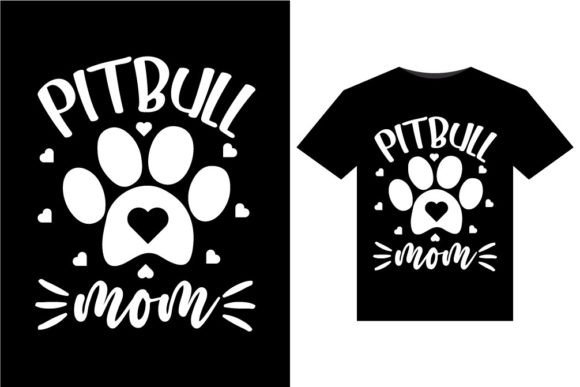
Pitbull Mom T-Shirts Design
First Impression: Warm, Bold, and Unapologetically Friendly
As someone who’s stitched hundreds of pet-themed designs—from delicate paw prints to intricate breed portraits—I opened Pitbull Mom T-Shirts Design expecting charm, not caricature. What landed on screen was clean, confident, and surprisingly tender: a stylized pitbull illustration paired with warm, legible lettering that says “Mom” without shouting it. It doesn’t lean into aggression or irony—it leans into love. That matters. When you’re embroidering for real people—especially moms ordering custom baby onesies or boutique sweatshirts—the emotional resonance carries as much weight as stitch count.
How It Translates to Real Embroidery Projects
Last week, I prepped this design for a client’s small-batch embroidered tote bag line—canvas totes for a local dog rescue fundraiser. I resized Pitbull Mom T-Shirts Design to 4.2 inches wide and ran a test on medium-weight cotton duck with tear-away + cut-away stabilizer combo. The outline held crispness, the fill areas stayed breathable (no puckering), and the “Mom” lettering remained legible at that scale—not always guaranteed with vector-based graphics repurposed for embroidery. That tells me this isn’t just a print-ready graphic; it has inherent embroidery-readiness in its spacing, stroke weight, and negative space balance.
I’ve also used it on baby onesies (with reduced density and soft poly thread), aprons for a pet-friendly bakery, and even as an embroidered patch sewn onto denim jackets. In every case, the design retained personality without overwhelming the garment. It works especially well on relaxed-fit tees, crewneck sweatshirts, and structured totes—surfaces where clarity and warmth matter more than hyper-detail.
Where to Use It Thoughtfully
- Small hoop sizes: Avoid hooping tighter than 3.5" unless you simplify or re-digitize fine interior lines—those subtle ear contours and collar details may collapse below 3".
- Textured or stretchy fabrics: On ribbed knits or slubbed linen tea towels, add a light iron-on stabilizer underneath and reduce top tension slightly. The design’s moderate stitch density helps, but texture eats definition fast.
- Dark or heavy fabrics: Test thread contrast early. A charcoal grey thread on black fabric disappears; off-white or cream pops beautifully—and feels intentional, not accidental.
- Curved surfaces like caps: This design isn’t ideal for front-panels of low-profile caps unless resized under 2.75". The horizontal layout fights curvature; consider rotating or cropping for better flow.
- Frequent-wash items: For kitchen towels or kids’ tees, double-check satin-stitch edges—if the original file uses tight satin borders, they may fray over time. A quick pass with running stitch reinforcement helps longevity.
What It Adds to Your Finished Product
Embroidery isn’t just decoration—it’s trust. When a customer sees clean, balanced stitching on a Pitbull Mom T-Shirts Design-embroidered pillow cover or holiday gift sweater, they read professionalism, care, and authenticity. That perception lifts perceived value, especially for Etsy sellers and craft fair vendors pricing handmade products at premium tiers. I’ve watched buyers linger longer on listings featuring this design in natural-light mockups—particularly when styled with real pitbulls nearby. There’s recognition, yes—but also quiet respect.
It strengthens brand consistency too. Whether you're building a niche line of “dog mom” apparel or curating a small shop’s seasonal collection, Pitbull Mom T-Shirts Design delivers cohesive visual language: friendly but grounded, playful but polished. No clipart energy. No forced whimsy. Just warmth, rendered with restraint.
Practical Notes Every Embroidery Designer Should Run Through
- Test on scrap fabric first—especially if stitching on blends or performance fabrics. Vector scalability doesn’t equal automatic stitch adaptability.
- Check thread color contrast across both light and dark backgrounds before finalizing your palette. What reads bold on white may vanish on navy.
- Review stitch density in fill areas. If the file includes dense fill stitches, consider reducing density by 10–15% for breathable wearables like tees or baby clothes.
- Confirm hoop size compatibility before digitizing or purchasing—some versions of this design may assume standard 4x4 or 5x7 hoops.
- Inspect small details under zoom: tiny eyes, collar tags, or whisker lines can vanish in thread unless digitized with appropriate underlay and stitch length.
- Test in black-and-white mockups to assess tonal balance—this reveals whether the design relies too heavily on color contrast rather than shape and weight.
- Use proper stabilizer for your base fabric—not just “medium” or “heavy,” but the right *type*: cut-away for knits, tear-away for stable wovens, fusible for lightweight silks or rayons.
- Verify licensing before selling finished items or digital embroidery files. Since this is listed as a Graphics product, confirm whether commercial use, resale of stitched goods, or redistribution of digitized files is permitted.
A Design That Fits Its Purpose—Without Overreaching
Pitbull Mom T-Shirts Design doesn’t try to be everything. It’s not a complex applique design with layered fabrics, nor is it a minimalist monogram meant for cuff embroidery. It lives comfortably in the sweet spot: expressive enough for personalized gifts, simple enough for high-volume craft business output, and warm enough to make customers smile—not just recognize a breed. Whether you’re prepping a holiday embroidery run, refreshing your Etsy shop’s bestsellers, or designing a limited batch of rescue-themed aprons, this design earns its place in your library—not because it’s trendy, but because it’s trustworthy.
If you treat it like a collaborator—not just a file—you’ll find it adapts quietly to your workflow, supports your brand voice, and keeps coming back in customer requests. And in this industry, that kind of repeat resonance? That’s the real hallmark of a working design.