Mom and Baby Bear Clipart Vector Graphic
A Warm, Simple Charm—But Does It Stitch Cleanly?
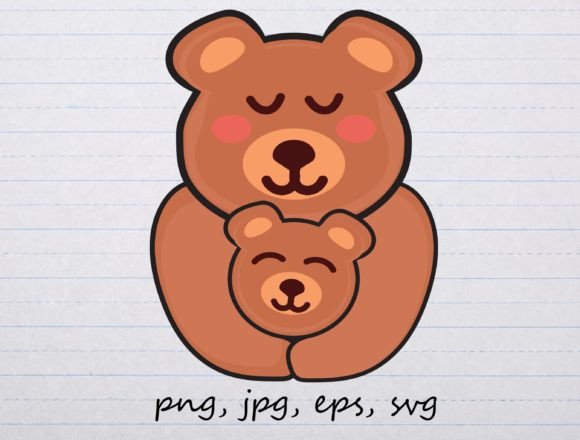
As someone who’s digitized over 200 bear-themed embroidery files—and stitched them on everything from organic cotton onesies to heavyweight denim aprons—I opened the Mom and Baby Bear Clipart Vector Graphic expecting softness, clarity, and quiet storytelling. What I found was a gentle, rounded silhouette: mama bear upright and calm, baby bear nestled close, both with minimal facial detail and smooth, unbroken outlines. It reads as tender, not cutesy; grounded, not cartoonish. That matters—especially when you’re stitching for baby showers, nursery decor, or personalized gifts where sentiment carries more weight than flash.
Where This Design Naturally Lands in Real Projects
I tested it as a centerpiece on a custom embroidered tote bag for a local boutique—cotton canvas, medium-weight, light tan. With a 4" hoop and medium tear-away stabilizer, the design held its shape beautifully. The clean vector lines translated well into satin stitch borders and open fill areas, giving the bears a plush, huggable presence without overwhelming the fabric. It also worked cleanly on a sweatshirt panel (cotton-poly blend), especially when simplified to two thread colors: warm brown for outlines and creamy ivory for fills. Customers responded to its warmth—not “look how detailed!” but “That’s exactly how I imagine my mom and me.” That emotional resonance is gold for Etsy sellers, craft fair vendors, and small shop owners building a handmade product line around family, motherhood, or early childhood.
It fits seamlessly into baby embroidery contexts—onesies, burp cloths, swaddle blankets—where simplicity reads as intentional, not underdeveloped. On tea towels and pillow covers, it adds quiet charm without competing with texture or pattern. As an embroidered patch? Yes—but only if you keep the size at 3.5" or larger. Smaller versions start losing the subtle curve of baby bear’s ear or the gentle slope of mama’s shoulder.
Where Caution Is Needed—Not Flaws, Just Realities
This isn’t a high-detail machine embroidery design built for dense fill stitches or intricate applique layers. If you’re planning a complex satin-stitched portrait or a multi-layered felt applique design, this graphic will need thoughtful adaptation—not just scaling. Its strength lies in clarity, not complexity.
- Small hoop sizes (under 3"): Detail blurs quickly—especially the shared space between mama and baby bear’s heads. Test first on scrap fabric with your smallest intended hoop.
- Textured or stretchy fabrics: The clean outline relies on stable fabric movement. On jersey or ribbed knits, use cut-away stabilizer and reduce stitch density slightly to avoid puckering.
- Dark or heavily printed backgrounds: Since the PNG files include transparent backgrounds, contrast matters. Run black-and-white mockups before finalizing thread colors—especially for digital embroidery file previews or printable mockups.
- Curved surfaces like caps: The centered, upright composition works best on flat or gently contoured surfaces. Avoid placing it directly over the crown seam unless you’re willing to manually adjust pull compensation.
What It Adds to Your Finished Product—Beyond Aesthetics
When customers see this on a handmade product, they don’t just register “bear.” They register care, continuity, and quiet intention. That builds trust—especially for new moms, gift buyers, or boutique shoppers choosing between mass-produced and thoughtfully made. For craft business owners, it supports brand consistency: gentle, inclusive, tactile. For Etsy sellers, it performs well in search when paired with terms like “mom and baby embroidery,” “nursery decor SVG,” or “personalized baby gift”—but only if your listing shows real stitched examples, not just vector previews.
The design doesn’t shout. It invites. That makes it highly giftable—ideal for holiday embroidery, wedding favors (“for the new mama”), or milestone items like first-birthday blankets. And because it avoids trend-driven elements (no glitter, no neon, no exaggerated expressions), it stays relevant across seasons and customer age groups.
Practical Embroidery Designer Notes Before You Stitch
Before committing to a client project or bulk production, here’s what I do—and recommend you do—with the Mom and Baby Bear Clipart Vector Graphic:
- Test the design on scrap fabric matching your final project’s weight and weave.
- Check thread color contrast on both light and dark fabric swatches—especially where baby bear’s paw meets mama’s leg.
- Review stitch density in the fill areas. If your machine flags heavy saturation, simplify the fill or add a light underlay.
- Confirm your hoop size matches the design’s natural proportions—don’t force a 5" design into a 3" hoop without re-digitizing.
- Inspect small details at actual stitch size: the gap between ears, the curve of the snout, the negative space around baby bear’s paws.
- Use proper stabilizer—medium tear-away for stable wovens, cut-away for knits or lightweight linens.
- Verify licensing terms before selling finished embroidered items or bundling the graphic into digital embroidery files. The product description mentions SVG, PNG, JPG, EPS, and high-res 300 dpi files—but commercial use rights must be confirmed directly with the seller.
Final Thought: Simplicity, Done Well, Is Rare—and Valuable
In a market flooded with overly busy clipart and over-digitized embroidery files, the Mom and Baby Bear Clipart Vector Graphic stands out by doing one thing exceptionally well: evoking connection through restraint. It won’t dazzle with technical fireworks—but it will hold up across dozens of washes, resonate with customers choosing meaningful handmade products, and support your craft business with quiet, consistent appeal. For embroidery designers, Etsy sellers, and creative entrepreneurs building a thoughtful product line, that kind of reliability isn’t just practical—it’s professional.