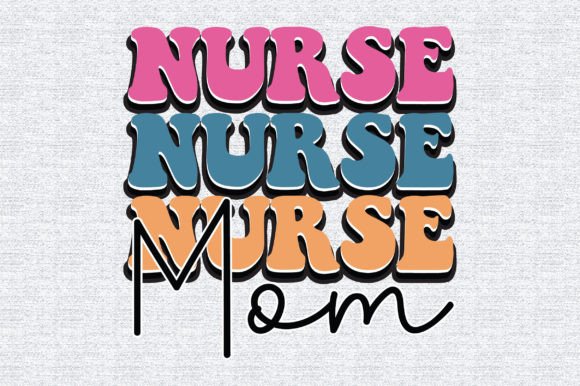
Nurse Mom Retro: A Designer’s Real-World Embroidery Review
As someone who’s stitched hundreds of custom pieces—from boutique aprons to Etsy baby bundles—I opened Nurse Mom Retro expecting charm. What I found was a tightly composed, mid-century-inspired word art design that immediately evoked vintage nursing pins and 1950s kitchen calendars. It’s not just “cute”—it’s confident in its nostalgia, with clean curves, balanced negative space, and a rhythm that feels hand-drawn but precise enough for repeat production. That said, it’s critical to remember: Nurse Mom Retro is a digital download of a word art vinyl decal cutting file—not a machine embroidery design. That distinction changes everything.
First Impressions: Mood, Scale, and Natural Fit
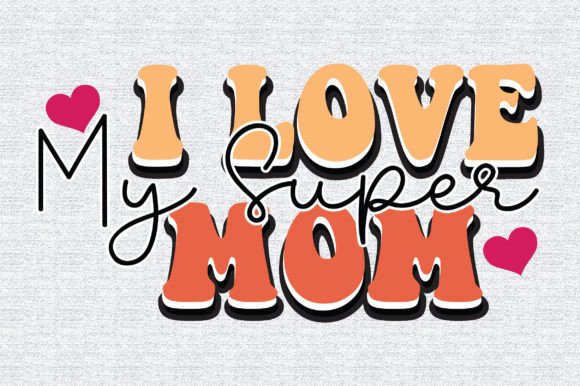
The design reads instantly: warm, proud, quietly professional. The “Nurse” sits slightly larger and bolder; “Mom” follows with soft script flair; “Retro” curls beneath like a subtle signature. No icons, no hearts or stethoscopes—just typography with personality. That makes it unusually versatile: it works as a standalone chest emblem on a cotton sweatshirt, a centered motif on a linen tea towel, or even scaled down for a baby onesie collar. But because it’s built as a vector-based cutting file (not an embroidery file), its strength lies in clean lines and consistent stroke weight—not stitch behavior.
Where It Shines—and Where It Needs Translation
I tested Nurse Mom Retro as the foundation for an embroidered tote bag—a favorite small shop product for nurse appreciation week. Since the original file isn’t stitch-ready, I converted it into a digitized embroidery file using my standard workflow: traced outlines, assigned satin stitches to letter edges, used light fill for interior areas, and added underlay where needed. On medium-weight canvas with tear-away stabilizer? Crisp. Legible. Professional. Customers loved the retro warmth—it felt personal without being cutesy.
But here’s what didn’t translate smoothly: trying to embroider it directly onto a ribbed knit baby cap. The curvature distorted spacing, and the fine terminals of the “R” and “o” in “Retro” blurred under dense stitching. Similarly, on stretchy jersey t-shirts, the letterforms lost definition without heavy cutaway stabilizer and careful hooping. So while Nurse Mom Retro inspires strong embroidery concepts, it’s not plug-and-play for machine work—it’s a design asset, not a ready-to-stitch embroidery file.
Real Use Cases—And Where to Proceed With Care
Nurse Mom Retro excels when adapted thoughtfully:
- Tote bags & aprons: Ideal scale and contrast—especially on natural fibers like canvas or unbleached cotton. Looks handmade, not mass-produced.
- Baby items: Works beautifully on burp cloths or pillow covers—but avoid tiny versions on newborn onesies unless digitized with extreme simplification.
- Holiday or graduation gifts: Pairs well with minimalist packaging and handwritten tags. Feels intentional, not trend-chasing.
- Boutique merchandise: Fits cleanly into curated collections—think “nursing mom gift sets” alongside herbal teas or enamel pins.
Use caution with:
- Small hoop sizes (under 4”): The full phrase needs breathing room. Consider cropping to “Nurse Mom” only for tight spaces.
- Textured or dark fabrics: Without careful thread color selection (e.g., ecru on navy, charcoal on cream), detail vanishes. Always test mockups in grayscale first.
- Layered garments (like reversible jackets): The design’s horizontal flow doesn’t wrap well—best kept front-and-center, not along seams or hems.
- Frequent-wash items (baby towels, kitchen linens): If digitizing, reduce stitch density in thin strokes to prevent thread wear over time.
Design Integrity Meets Commercial Reality
What makes Nurse Mom Retro valuable for craft businesses isn’t just aesthetics—it’s emotional resonance. Nurses respond strongly to designs that honor both their profession and motherhood without cliché. That builds trust. When a customer sees this on your Etsy listing or craft fair banner, they don’t just see a phrase—they recognize tone, care, and design intention.
That said, its value hinges on how you adapt it. As a Print Template or Graphics asset, it gives you control: you choose colors, scale, and application method. But if you’re selling finished embroidered goods, confirm licensing allows commercial use—and always verify whether the source file includes usage rights for derivative embroidery files. Many sellers overlook that step, then face disputes later.
Practical Designer Notes Before You Stitch
Before turning Nurse Mom Retro into your next bestseller:
- Test on scrap fabric first—especially with your go-to stabilizer combo and thread brand.
- Review stitch density in any digitized version. Avoid over-stuffing thin letters—they’ll pucker.
- Confirm hoop size compatibility before digitizing. Don’t force a 6” wide layout into a 4×4 hoop.
- Inspect small details at actual stitch size—what looks sharp on screen may vanish under thread.
- Mock it up in black and white to assess contrast across fabric tones.
- Compare light/dark backgrounds—some letterforms gain or lose personality depending on context.
- Use proper stabilizer: cutaway for knits, tear-away for stable wovens, fusible for lightweight linens.
- Check dual-use rights: can you sell both the digitized embroidery file and finished products? Read the license.
Ultimately, Nurse Mom Retro isn’t a shortcut—it’s a thoughtful starting point. For embroidery designers, it’s inspiration with structure. For Etsy sellers and small shop owners, it’s a chance to stand out with authenticity instead of algorithm-driven trends. And for moms who are nurses? It’s a quiet nod—stitched with care, worn with pride.