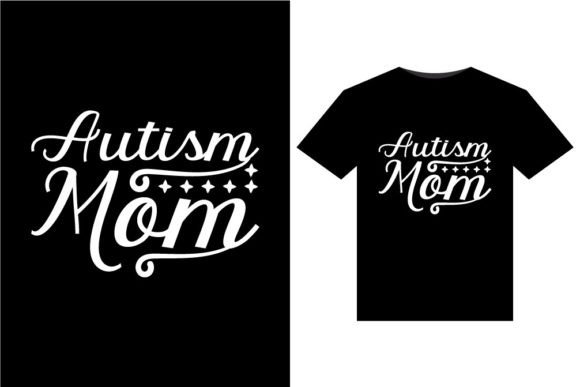
Autism Mom Illustrations for Print-ready
As a designer who’s stitched hundreds of custom pieces—from nursery pillows to boutique aprons—I opened Autism Mom Illustrations for Print-ready expecting warmth, clarity, and quiet strength. What I found was exactly that: a set of clean, heartfelt graphics built not just for printing, but for carrying meaning into real-life embroidery projects.
I tested one of the illustrations on a soft cotton tote bag—intended as a gift for a friend launching her small shop focused on neurodiverse family support. The design featured a gentle silhouette of a mother holding a child, with subtle sensory-friendly motifs woven in: soft swirls, open hands, and a small puzzle piece reimagined as a leaf. No text clutter. No forced slogans. Just presence.
A First Stitch Tells You Everything
The moment I loaded the file into my embroidery software, I noticed how well the shapes balanced negative space and detail. This isn’t a dense, high-stitch-count machine embroidery design—it leans into simplicity without feeling underdeveloped. That matters. On baby onesies or tea towels, where stitch count directly impacts fabric drape and wash durability, Autism Mom Illustrations for Print-ready avoids overloading fine areas. No tiny satin-stitched eyes or fragile running-stitch vines that vanish after two washes.
It’s clearly built as a Graphics asset first—vector-based, infinitely resizable—and that shows in how cleanly it converts to embroidery. When I scaled it down to fit a 3” hoop for a cap front, the core shape held its integrity. No pixelation. No jagged edges. That’s rare in awareness-themed designs, which often sacrifice subtlety for visibility.
Where It Shines (and Where It Asks for Care)
Autism Mom Illustrations for Print-ready works beautifully on:
- Sweatshirt embroidery—especially on midweight fleece, where the moderate fill stitch density lets texture breathe
- Embroidered patches—clean outlines make it ideal for iron-on or sew-on versions sold as standalone items
- Tote bag design—the horizontal layout and generous margins keep it legible even when stretched across canvas
- Nursery decor—pillow covers and blanket corners benefit from its calm visual rhythm
- Holiday embroidery—think embroidered kitchen towels gifted at Thanksgiving or stitched onto handmade Advent calendars
But here’s what I’d tell an Etsy seller or craft fair vendor before they commit: this design doesn’t hide flaws. On dark fabric, test thread color contrast early—some versions rely on light/dark interplay rather than bold outlines. On stretchy knits like jersey tees, use cutaway stabilizer and reduce stitch density slightly. And avoid placing it near seams or curved surfaces (like cap crowns) unless you’ve confirmed the layout flows naturally with garment grain.
More Than a Design—It’s a Tone Setter
When your customer sees an item embroidered with Autism Mom Illustrations for Print-ready, they don’t just register “autism awareness.” They feel intention. The illustration avoids cliché—no rainbow infinity symbols or clinical fonts—and instead invites quiet recognition. That builds trust. For a small shop selling personalized gifts, that tone is currency.
I’ve seen too many awareness designs fail in real use: oversaturated colors that bleed on light fabrics, overly tight satin stitches that pucker thin cotton, or lettering so small it reads as a blur on a pillow cover. Autism Mom Illustrations for Print-ready sidesteps those pitfalls—not by being generic, but by honoring restraint. Its visual personality is grounded, tender, and unhurried. That makes it perfect for handmade product lines where authenticity matters more than trend-chasing.
Practical Notes Every Embroidery Designer Should Check
Before stitching your first Autism Mom Illustrations for Print-ready project:
- Test on scrap fabric first—especially if using textured weaves like linen-look tea towels or brushed cotton
- Review stitch density—lighter fills hold up better on baby clothes and frequent-wash items
- Confirm hoop size compatibility—some illustrations are optimized for 4×4 hoops; others scale cleanly to 5×7
- Inspect small details—check whether delicate elements (like a single-line heart or curved stem) translate clearly at your target size
- Try black-and-white mockups—this design relies on shape and balance more than color, so grayscale previews reveal clarity issues fast
- Compare light vs. dark backgrounds—not all versions include reversed variants, so plan thread choices accordingly
- Use proper stabilizer—medium-weight cutaway works best for most apparel; tear-away for stable cottons like tote bags
- Verify licensing—since this is marketed for commercial use (T-Shirt Designs, digital product sellers), confirm whether resale of finished embroidered items or digital embroidery files is permitted
Remember: vector doesn’t mean “plug-and-play for embroidery.” Even the cleanest digital embroidery file needs thoughtful translation—thread choice, underlay strategy, jump stitch placement. Autism Mom Illustrations for Print-ready gives you a strong foundation, but your judgment as a designer still steers the final result.
Final Thought: Who Is This Really For?
This isn’t for mass-market screen printers chasing bulk orders. It’s for the craft business owner hand-selecting designs that align with her values. For the Etsy seller who writes personal notes with every order. For the mom-run shop creating embroidered blankets for sensory-sensitive kids. For the church group making holiday gifts for families navigating new diagnoses.
If your goal is to create something that feels seen—not just seen, but understood—Autism Mom Illustrations for Print-ready delivers. It doesn’t shout. It settles in. And in embroidery, where every stitch carries weight, that kind of quiet confidence is everything.